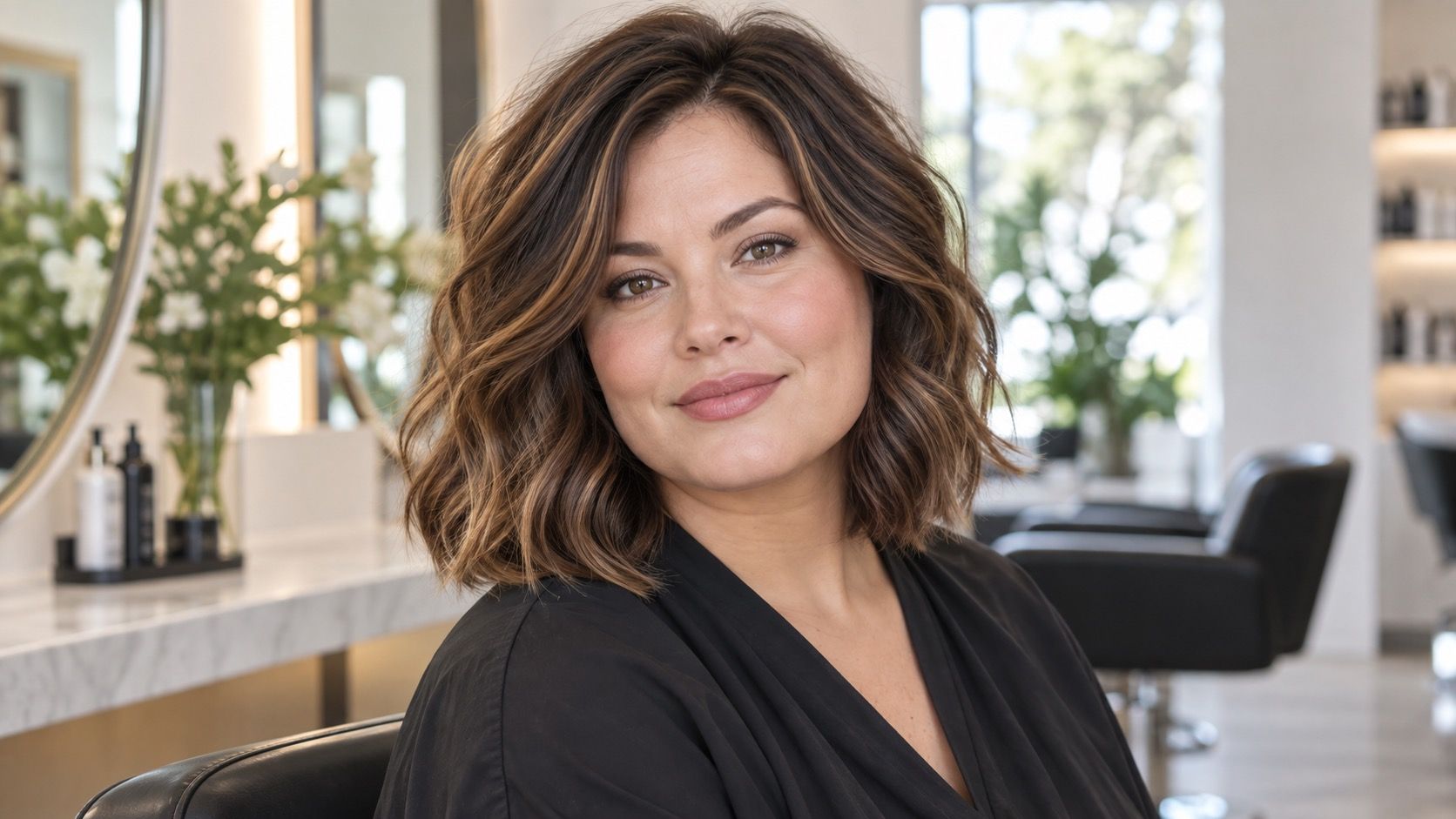
A triangle face shape, sometimes called a pear face shape, carries its width low: the jawline is broader than the forehead, and the face narrows as it moves upward. That is a useful observation, not an instruction to camouflage the jaw. It simply explains why volume at the temples, a well-chosen fringe, or a frame with a little presence at the brow can make the whole face feel more evenly paced. The best choices still depend on your hair texture, glasses prescription, and how much styling you honestly want to do.
Identify a triangle face by following the width upward
With your hair pulled back, compare the forehead, cheekbones, and jaw in a straight-on mirror. A triangle face normally has its widest line at the jaw, often with a firm lower-face outline, while the temples and forehead are noticeably narrower. The chin may be rounded or slightly pointed; the important feature is the broader jaw rather than the chin shape alone.
Take a photo from a normal distance before deciding. A close selfie can make the lower face appear larger, and hair that is tucked behind both ears exposes the jaw more than you may expect. If your forehead and jaw are similar in width, consider square or rectangle. If the forehead is wide and the chin is narrow, heart is a better match. If the cheekbones are the widest point, look at diamond.
Face shapes overlap. A strong jaw can appear on several outlines, and weight changes, facial hair, or a short haircut can shift the visual impression. Use the triangle label when it describes the overall proportions most of the time. It is a styling shortcut, not a permanent identity.
Put hair volume where it changes the balance
The best haircut for a triangle face often brings a little fullness to the upper third of the face. Soft layers around the temples, a textured fringe, a side part with lift, or waves that begin above the cheekbones can do this without looking over-styled. A layered shoulder-length cut is a practical starting point because it offers movement near the crown while leaving enough length to soften the jaw.
Very blunt cuts that end at the jaw can add visual weight exactly where the face is already broad. That does not mean you must avoid bobs. A bob with volume at the crown, a side part, curved ends, or length below the jaw can look excellent. Ask your stylist to discuss the outline from the front. The name of the cut matters less than where its widest, fullest point lands.
For long hair, layers near the temples and cheekbones tend to be more useful than a single heavy curtain of hair. For short hair, a textured crop with a little height at the crown can create a lively silhouette. Be cautious with shaved sides plus a flat top if your goal is balance; it narrows the upper face further. If you love that sharp look, wear it for the graphic contrast rather than expecting it to soften proportions.
Bangs and partings offer a low-commitment experiment
A textured fringe can add width and interest across a narrower forehead. It need not be thick. Separated pieces, a soft side fringe, or longer curtain sections are often easier to grow out and kinder to a natural cowlick. The useful test is whether the fringe opens naturally at the temples instead of becoming a dense triangle of hair in the middle of the forehead.
Side parts are popular because they create diagonal movement and lift at one side of the upper face. A centre part can still work, especially with curls or layers that have volume around the temples. Flat, centre-parted hair tucked behind both ears tends to reveal the jaw most clearly. That might be exactly what you want; just understand the effect before treating a parting as universally flattering or unflattering.
Do a home trial before a major cut. Change your part for several wash days, use a round brush or clips for temporary root lift, and take a few ordinary photos. Hair advice that survives your own bathroom humidity and morning routine is more valuable than a perfect salon image.
Glasses can add visual weight above the cheeks
Top-weighted frames, gentle cat-eye shapes, browline styles, and frames with a slightly wider upper edge can bring attention toward the eyes and forehead. This is why they often suit a triangle face. The fit check comes first: the frame should sit securely on the bridge, leave room for the cheeks when you smile, and not extend so far past the temples that it looks costume-like.
Very narrow, low-slung frames can make the lower face look broader by contrast. Thick frames with a strong straight top edge can be dramatic, but a rounded browline is often easier to wear daily. Try at least one light-coloured or translucent option. A dark, heavy rim can change the balance far more than the same silhouette in metal or clear acetate.
For sunglasses, view the frame in daylight and from a few steps back. Large lenses can be flattering, but the arms, brow bar, and lens tint all add weight. The best pair is not the one a chart calls correct; it is the one that fits well and lets your features remain visible.
Makeup and facial hair should be placed, not prescribed
Makeup can shift emphasis upward with blush placed slightly high and outward toward the temple, a little brow definition, or a brighter eye look. Keep contour around the jaw light unless you specifically enjoy a sculpted finish. Strong dark shading below an already broad jaw can read harsher in daylight than it did under warm indoor lighting.
If you use bronzer, blend it around the outer forehead and upper cheek area to add warmth where the face is narrower. There is no need to create a new forehead with makeup. A natural transition is usually more convincing than a technical-looking map of contour lines. Check the result with the rear phone camera; it is less forgiving and therefore a useful reality check.
For facial hair, a short beard with modest fullness at the upper cheeks or a moustache can shift attention upward. Avoid automatically widening a squared beard at the jaw if you are trying to reduce lower-face emphasis. A good barber will assess your natural growth pattern first, because forcing a beard outline against sparse areas looks less balanced than a simple, well-kept shape.
Compare the options before committing
| When you notice | Try first | Practical caution |
|---|---|---|
| Jaw is clearly widest | Temple layers or crown lift | Do not place the haircut's widest point at the jaw |
| You want bangs | Textured fringe or soft side pieces | Test for cowlicks and daily maintenance |
| You need daily glasses | Browline or gently top-weighted frames | Check actual bridge and temple comfort |
| You prefer a cropped cut | Texture and height on top | Flat tops and shaved sides sharpen the contrast |
Triangle face features are clear and distinctive, which gives you a solid base for style choices. Begin with a reversible adjustment—a new part, a little temple volume, or a different frame shape—and see how it feels over a normal week. The useful version of balance is the one that still feels comfortable when you are not thinking about face shape at all.