A face shape photo can be helpful for comparing proportions, but it can also make a familiar face look oddly wide, long, or uneven. The usual culprit is not your face; it is a close lens, a tilted camera, side light, or hair hiding part of the outline. A useful photo is simple and slightly unglamorous: eye-level, evenly lit, straight ahead, with enough distance for the lens to stop exaggerating the centre of the face.
Understand why a single photo can misread your proportions
Phone cameras do not record faces like a bathroom mirror. When the lens is held close, perspective makes the nose and centre of the face appear larger while the sides seem to recede. A camera below eye level can make the jaw look broader; a camera above can make the forehead and eyes dominate. Portrait mode may blur hair edges, and beauty filters can subtly change jaw width, cheek fullness, and skin shadows before you notice they are active.
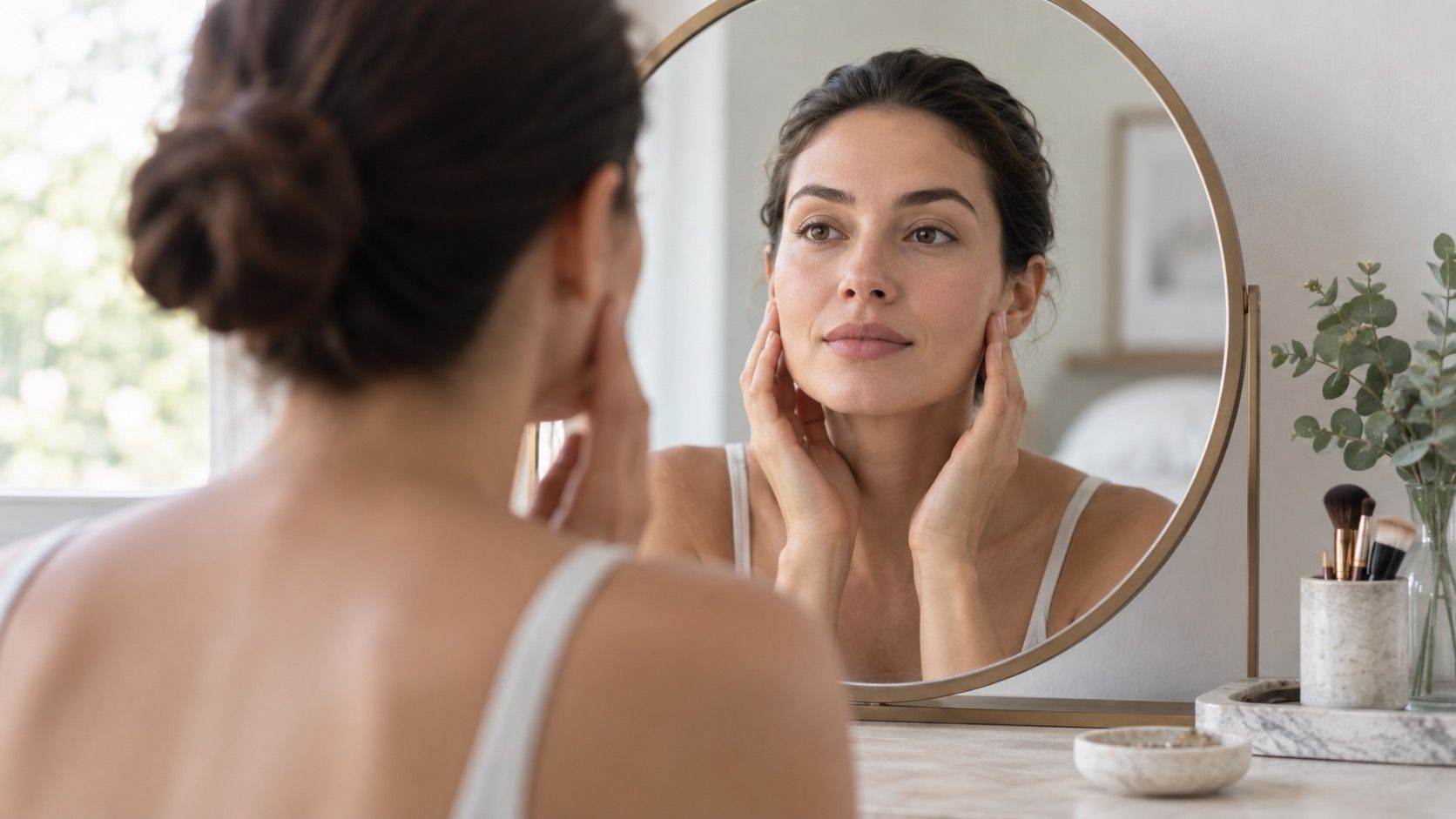
That is why a face shape analysis photo should be evidence, not a diagnosis. Use it alongside a mirror check and, ideally, a second photo taken from farther away. You are looking for repeated relationships: whether the cheekbones are wider than the forehead, whether the jaw is angular or tapered, and how the visible length compares with the visible width. Do not make a decision from a dramatic selfie taken in a car or late at night under one ceiling bulb.
Set up the camera and lens before you pose
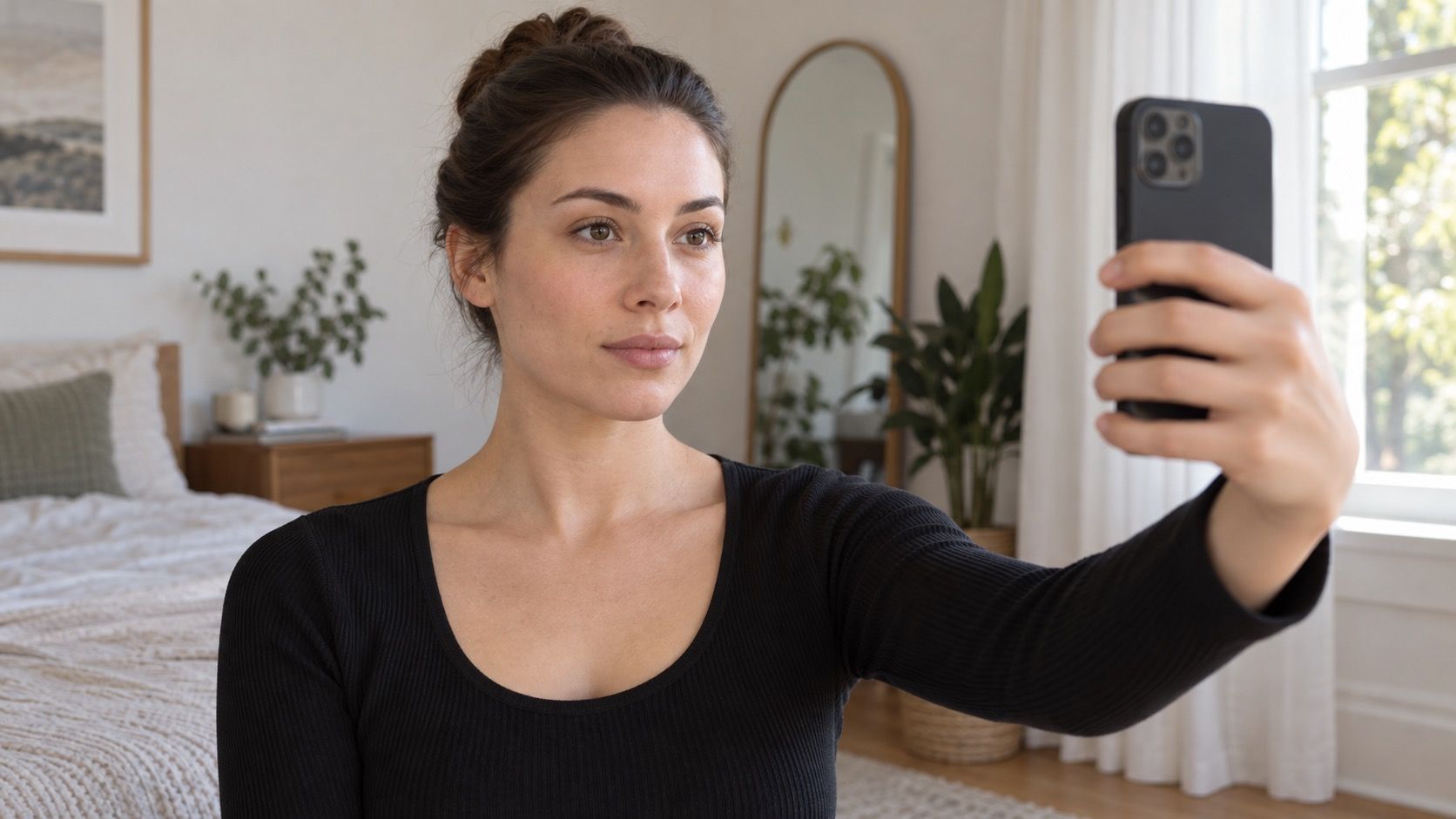
The rear camera is usually a better choice because it often has a less distorted main lens and a higher-quality sensor. Put the phone on a small tripod, shelf, or stable stack at roughly eye height. Step back several feet, then use a timer or ask another person to take the shot. If you must use the front camera, avoid holding it at arm's length; prop it up and move yourself back instead. Do not use the ultra-wide lens, which stretches the edges of the frame.
Keep the camera level and centred, not tipped to make the photo more flattering. The lens should face the middle of the face, not the chest or hairline. A plain background helps you see the outline without distraction. Take one image with no zoom and one with a modest optical or digital crop from farther away if the phone allows it; the farther view is often more representative than the closest, sharpest-looking image.
| Setup choice | What it changes | Better default |
|---|---|---|
| Close front-camera selfie | Can widen the centre and reduce the side outline | Phone supported at eye level, several feet away |
| Ultra-wide lens | Stretches features near the frame edge | Standard rear camera lens |
| Overhead room light | Creates deep eye and chin shadows | Soft, even window-facing light |
| Head turned slightly | Changes jaw width and cheek visibility | Front-facing neutral position |
Choose light that reveals the outline without creating new shadows
Stand facing a window on a bright but overcast day, or use diffuse light from in front of you. Direct sun creates harsh shadows below the nose and cheekbones, which can make a face look more angular or hollow. A lamp from one side is useful for a portrait but poor for comparing shape because it hides one cheek and lights the other. Avoid strong backlight as well; it turns the hairline and jaw into a silhouette while losing the small transitions you need to see.
Take off a hat and, if possible, glasses with dark or thick frames for the analysis shot. Glasses are useful when choosing frames, but they cover the eyebrow and bridge when you are trying to see baseline proportions. Keep makeup light if the aim is an accurate outline. Heavy contour and a high, bright highlight can give a face-shape filter effect that is attractive but not neutral.
Position the hair and head consistently
Pull hair away from the temples and jaw without stretching it severely back. A loose clip or headband is enough. The hairline is part of the face's visible proportion, while long hair falling over the cheeks can hide the actual width. If you have bangs that you normally wear, take one photo with them moved aside and another with them in place. The first helps with shape analysis; the second helps when you later choose a hairstyle or glasses that must work with your everyday look.
Keep the chin parallel to the floor, shoulders relaxed, and gaze into the lens. Do not push the chin forward, lift it, suck in the cheeks, or angle the head to a favourite side. A neutral expression is best: lips resting, jaw unclenched, eyes open normally. A full smile changes the cheek and jaw shape, so it is valuable as a second image but not as the only reference. Small changes here are enough to alter the apparent length of the lower face.
Take more than one image and compare the stable features
Capture three images in the same setup: straight-on neutral, straight-on with a relaxed smile, and a modest three-quarter view. The front-facing photo is the main one for a face shape test; the others show how cheeks, jaw, and hairline behave in life. If the first attempt makes one side look clearly larger, check whether the camera was centred or the light was uneven before assuming your face is dramatically asymmetrical. Mild asymmetry is ordinary and does not invalidate the exercise.
When comparing photos, use the same crop and do not flip one image but not another. Flipped selfies can feel strange because you are used to your mirror image, not because the face suddenly changed. Look at the broad zones rather than tiny millimetre differences: forehead, cheekbones, jaw, and length. A category such as oval, round, square, heart, diamond, oblong, or triangle is only a shorthand for those relationships.
Use filters carefully and keep an unedited reference
A face shape filter can be entertaining and may point out a possible category, but it cannot know whether the image was taken with a wide lens, whether hair covers the temples, or whether a smoothing effect altered shadows. Treat a result as a suggestion to inspect, not a permanent label. If an app gives a different answer from a mirror and two well-made photos, the conflict is a reason to look again, not a reason to trust the most confident graphic.
Save one unedited, evenly lit image as a reference before experimenting with hairstyles, beard lines, glasses, or contour. Repeat the setup if you change hair length substantially. That small consistency makes comparisons more useful than chasing a perfect pose. An accurate face-shape photo is not the most flattering photo; it is the one that lets you see your proportions calmly and make style choices with less guesswork.