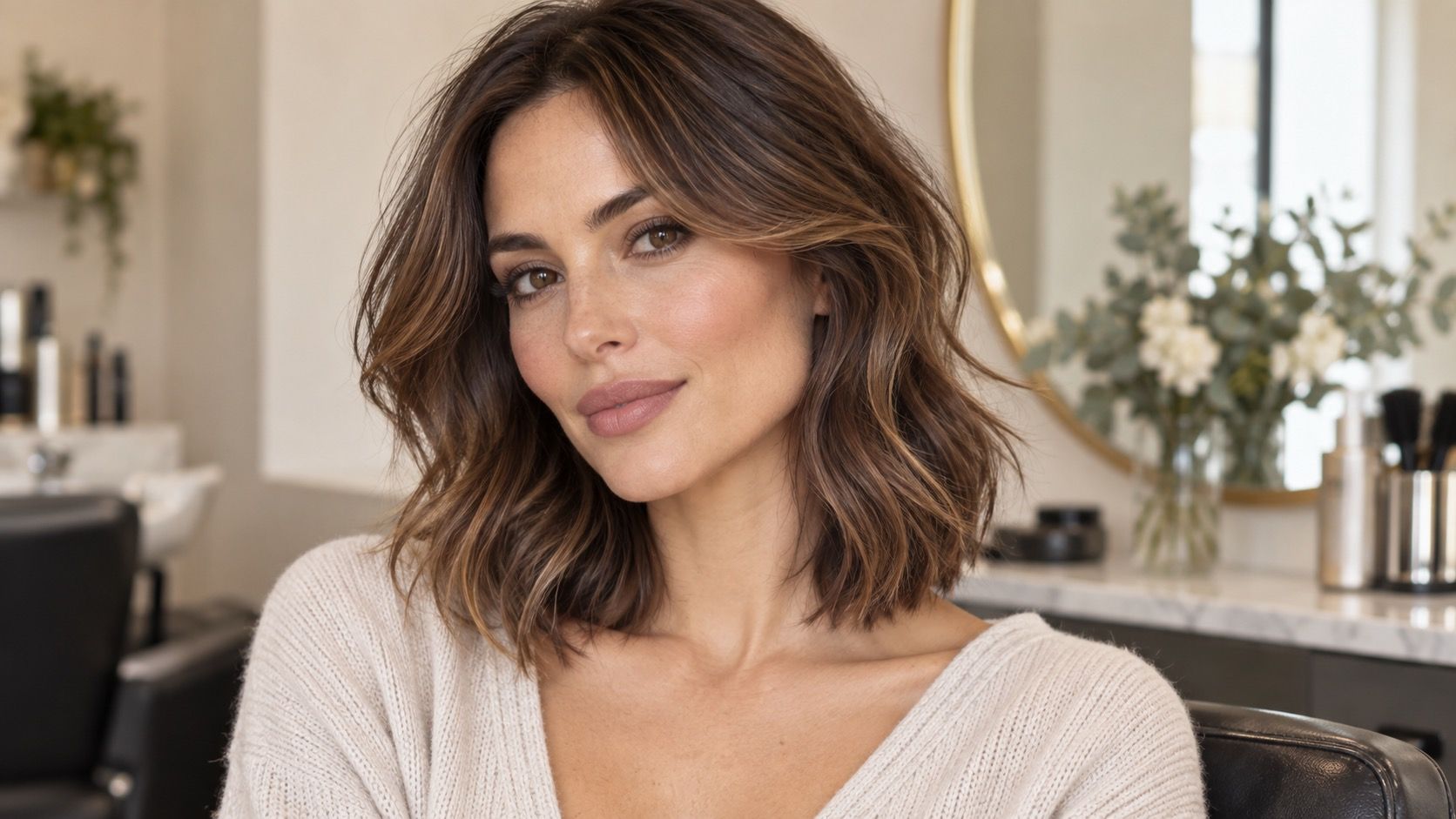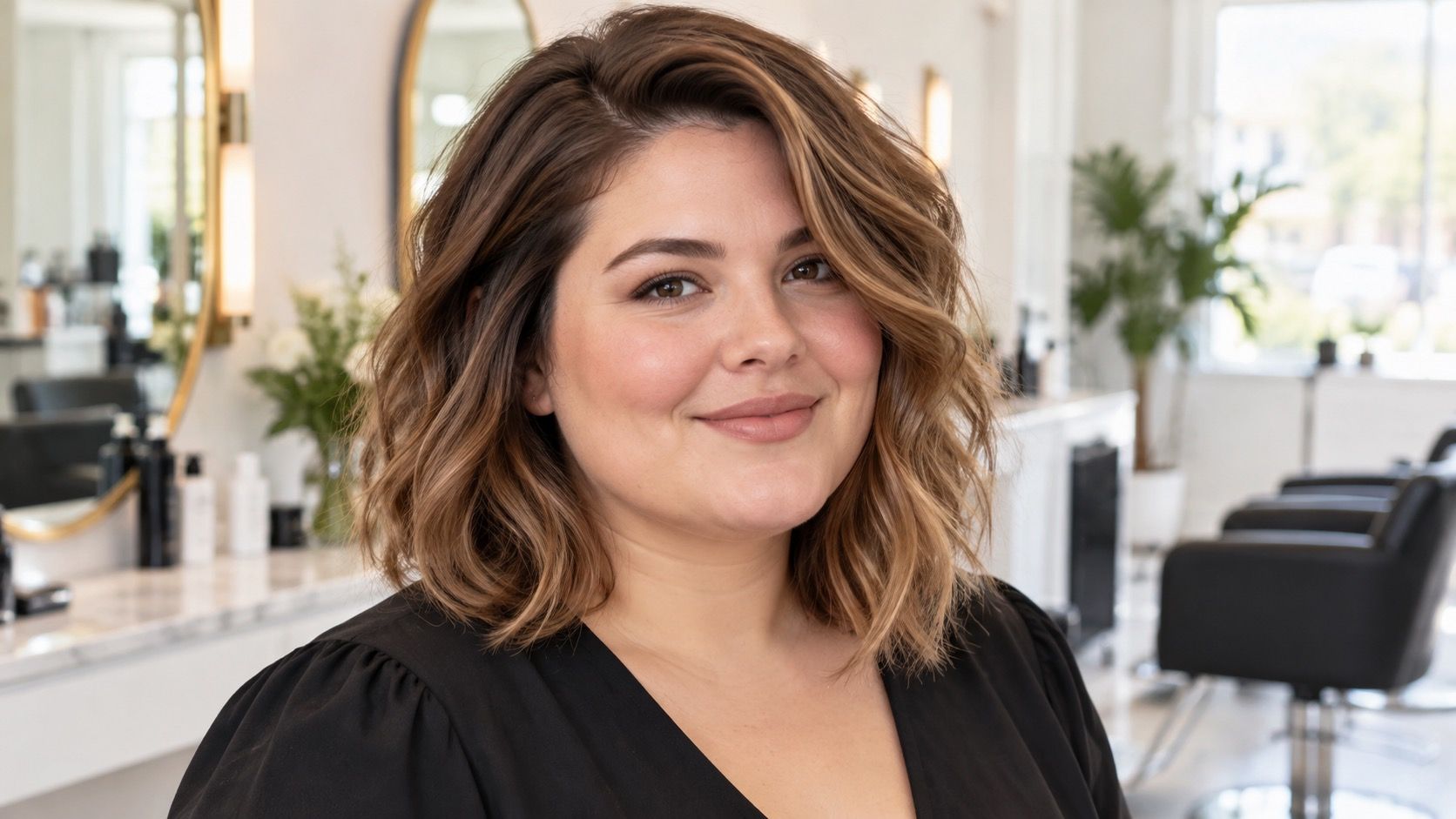
A round face shape is defined by softness and proportion, not by a single feature or by body size. The face often appears close in width and length, with fuller cheeks and a jawline that curves gently toward the chin. That outline can look fresh, friendly, and striking in photographs, but it also attracts a lot of overconfident styling rules. The better approach is to notice what you want to emphasise: cheekbones, eyes, height at the crown, or a clean jawline, then choose hair and frames for that effect.
Recognise a round face without relying on a selfie
Pull hair back loosely and look straight into a mirror in even daylight. A round face usually has its broadest point at or near the cheeks, while the forehead and jaw flow in a similar soft curve. Face length and cheekbone width may be fairly close, though they are rarely identical. The chin tends to be rounded rather than long, pointed, or sharply squared. These are tendencies, not entry requirements.
The most common confusion is between round and oval. An oval face carries a little more vertical length and narrows more clearly from cheekbones to jaw. A square face can also be close in width and length, but it has a stronger turn at the jaw corners. Look at the outer contour rather than the centre of the face. A raised brow, a smile, or a camera held above eye level can all make the face appear longer or more angular for a moment.
Take a second look with a front-facing photo made from several feet away. Close phone lenses distort proportions, often broadening the centre while changing the apparent jaw. If the mirror and the more distant photo tell the same story, you have enough information to use the term round face shape as a practical starting point.
Choose length and volume with everyday life in mind
The best haircut for round face proportions depends on hair texture and the shape you actually enjoy wearing. Length below the chin can create a longer vertical line, especially when face-framing layers start at the cheekbone or lower. A shoulder-length cut with a little crown height often feels light and flexible. It can be air-dried, curled, or tucked behind one ear without changing the whole idea of the cut.
Short hair is not off limits. A textured pixie with lift at the crown can show off the eyes and create an intentional silhouette. The useful question for a stylist is where the volume will sit. Width concentrated at cheek level may echo the broadest part of the face; volume a little higher can shift attention upward. Neither effect is wrong. Some people love the softness of a rounded bob, while others prefer a sharper shape with visible height.
| Hair choice | Visual effect | Practical question |
|---|---|---|
| Long face-framing layers | Movement and a vertical line | Will the layers work with your natural wave? |
| Shoulder-length cut | Flexible, easy to change with a part | Where will the ends sit when air-dried? |
| Textured pixie | Focus at eyes and crown | How often will it need reshaping? |
| Rounded bob | Soft, graphic echo of the outline | Do you enjoy using a brush or iron? |
Bring reference pictures showing hair like yours, not only the face shape you want to copy. Thick straight hair, fine hair, dense curls, and a strong cowlick make the same cut behave differently. A good consultation includes your morning routine, how often you wash it, and whether you want to wear it tied back. Those details matter more than a chart.
Partings and bangs can change the frame quickly
A side part is often suggested for round faces because it creates an asymmetrical line across the forehead. It can add a little direction to a soft outline, especially with a few pieces falling toward the cheek. But a middle part can look excellent too, particularly when the hair has height at the crown or longer layers that do not stop at the widest part of the face. Test both on a normal day rather than deciding under salon lights.
Long curtain bangs can soften the transition from forehead to cheekbone and grow out without drama. Side-swept bangs create a diagonal that many people find easy to wear. A short blunt fringe gives a deliberate, graphic look; it may make the face appear more compact, which can be exactly the appeal. Avoid calling any of these forbidden. The only real warning is maintenance: bangs that need a daily blow-dry are frustrating if you prefer to leave the house with damp hair.
For curly hair, watch the dry shape rather than the wet cut. Curl shrinkage can bring a layer much closer to the cheek than expected. Ask the stylist to show where it will spring up and consider a dry trim if that is part of their method. This small check prevents more disappointment than any face-shape rule.
Glasses can add definition or lean into softness
Angular frames are popular for a round face because rectangles, soft squares, and subtle cat-eye shapes create a contrast with curved cheeks. Look for a frame that is no wider than comfortable at the temples and that keeps your pupils near the centre of the lenses. A shape can be sharp without being narrow; very narrow frames may feel cramped and make a face look wider by comparison.
Round glasses are also a valid choice. They repeat the soft outline and can look thoughtful, playful, or classic depending on thickness and colour. If you choose them, pay attention to scale. A very small circular frame can disappear against fuller cheeks, while a larger one can become the main feature of the face. Try several sizes in daylight if possible, because dark frames and sunglasses have more visual weight outdoors.
The bridge fit matters more than a flattering diagram. Frames that slide down, pinch, or leave deep marks will not become good simply because they are angular. If you need prescription lenses, lens height and your optical prescription may limit the styles that work safely. Comfort is part of the final look.
Makeup placement is a choice, not a correction plan
Makeup can guide the eye without pretending to redraw your bone structure. Blush swept from the apple of the cheek toward the temple gives a lifted direction; blush kept more central reads softer and more youthful. Both can be beautiful. Try each placement with a light hand and look at your whole face from a step back. Heavy product often photographs differently from how it appears in a bathroom mirror.
If you use contour, a subtle shadow under the cheekbone or along the temple may add definition. It does not need to reach the mouth or form a rigid stripe. A clean brow shape and mascara can pull attention upward just as effectively, with less work. For a quick daily routine, one deliberate element is often enough: a higher blush placement, an interesting frame, or a bit of root lift.
Your round face features are not problems waiting to be disguised. They are a set of proportions you can echo, contrast, or ignore depending on the day. Use the label to make better experiments, keep the styles that make you feel recognisable in the mirror, and let comfort have the last word.