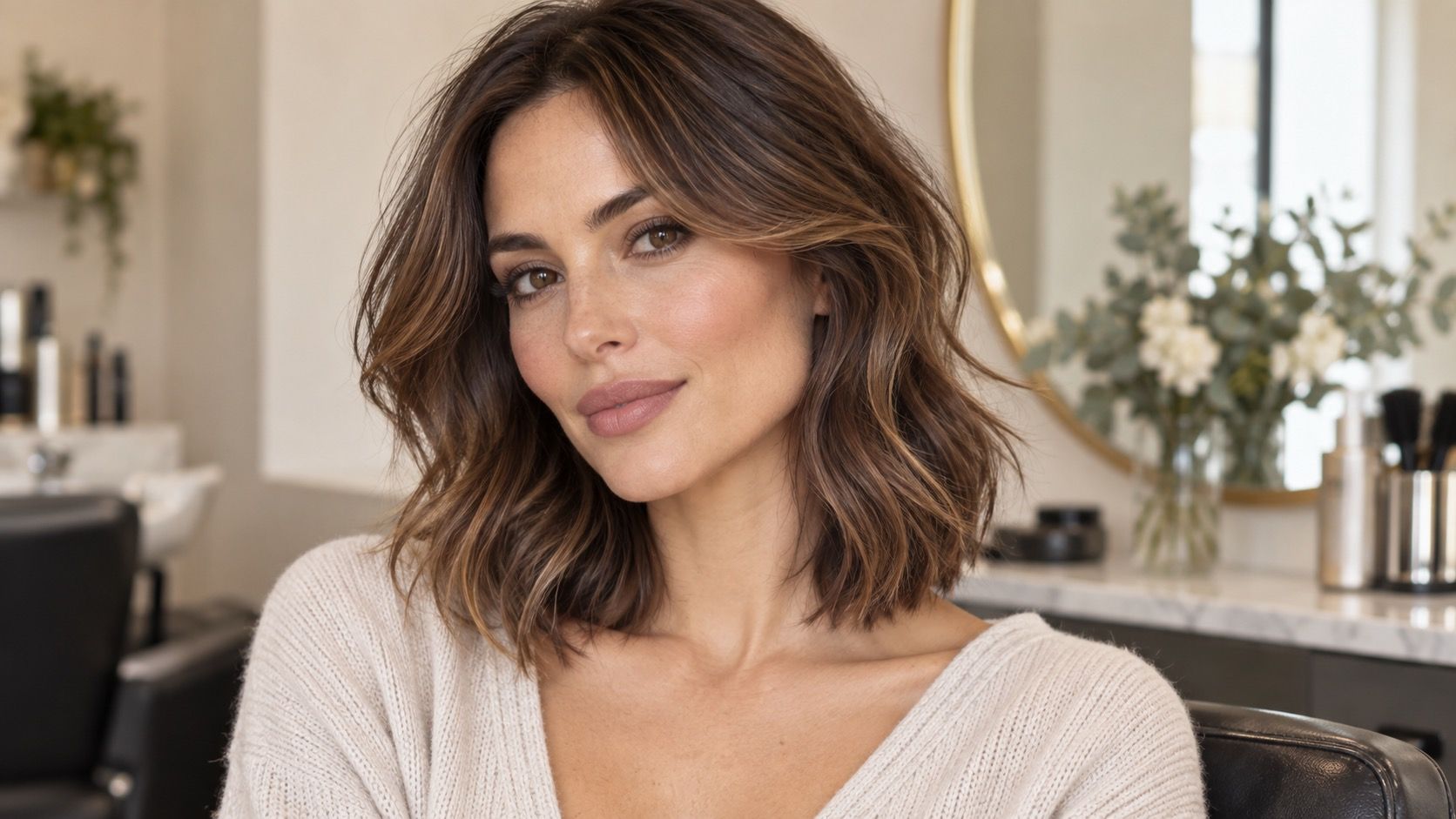
A heart face shape has a memorable outline: more width through the forehead and upper cheeks, then a gradual taper toward a narrower chin. That description is useful only when it helps with a real choice, such as whether a fringe will feel too heavy or why a pair of sunglasses keeps slipping visually upward. The aim is not to make every face look oval. It is to understand where volume and detail already sit, so a haircut, frame, or makeup look can either echo that contrast or calm it down.
Confirm the shape with a calm, straight-on check
Start with hair off the face and look in daylight. A heart shaped face often has its greatest width at the forehead or cheekbones, while the jaw narrows toward a pointed or softly rounded chin. Some people have a widow's peak, but it is optional; a heart outline can have a smooth hairline. The useful pattern is the taper below the cheeks, not a single feature.
Take one normal-distance photo rather than relying on a selfie made close to the lens. Phone distortion can enlarge the centre of the face and make a chin seem smaller than it is. Compare forehead width, cheekbone width, jaw width, and face length. If the jaw is actually widest, triangle is more likely. If the cheekbones are widest while both forehead and chin are narrow, diamond may fit better.
Do not mistake a soft jaw for a heart shape automatically. A round face is usually wide across the lower cheeks too, with no strong taper at the chin. A heart face often has a little visual drama between a broad upper face and a delicate lower one. That contrast is why styling near the jaw and chin can feel so effective.
Pick haircut placement before chasing a named style
The best haircut for a heart shaped face often introduces some fullness around the jaw, collarbone, or lower cheek area. A chin-length bob with slightly curved ends, a textured lob, or long layers beginning below the cheekbones can create an easy counterweight to a wide forehead. These are not disguises. They simply spread the visual weight through the whole outline instead of concentrating it at the temples.
Very short cuts can work beautifully when there is texture at the crown and a little softness around the forehead. A close crop with all the volume piled high can make the upper face appear wider, particularly if the sides are shaved tight. Ask for a shape you can recreate at home. The salon version may have a round brush, product, and twenty focused minutes behind it; your weekday version needs to survive a quick dry.
Long hair is flexible but not automatically balancing. One-length hair that sits flat at the crown and ends far below the chest can pull the eye down without adding anything near the chin. Face-framing layers, loose waves from mid-length, or a soft bend at shoulder level usually give a more deliberate result. If you love sleek long hair, a side part or tucked-behind-one-ear finish can add enough asymmetry.
Bangs and partings should work with your hairline
A curved fringe, long curtain bang, or side-swept fringe can soften the transition across a broad forehead. The practical advantage is that these shapes move; they do not make a solid horizontal shelf over the brow. Curtain bangs are especially useful if you want to test a fringe without losing the option to pin it back. Ask for the shortest point to be long enough for your natural cowlick.
Heavy straight bangs can look intentional on a heart face, but they need enough texture and side openings to avoid making the upper face feel compressed. They are also a commitment if your hairline separates in humidity. Spend a week wearing a clip-in fringe or styling the front forward before cutting it. Face-shape advice should never outrank a stubborn cowlick.
A centre part highlights symmetry and can be elegant with waves or lift at the roots. A side part shifts attention diagonally and often gives a little volume at one temple. Neither is objectively better. If your forehead looks broad mainly in photos, experiment with part placement under the same camera distance and lighting; mirrors and lenses can tell different stories.
Choose glasses by balance, fit, and brow line
For a heart face, frames with gentle width or visual weight lower down often feel balanced: oval shapes, rounded rectangles, light aviators, and softly bottom-weighted styles are sensible starting points. A frame should sit comfortably at the bridge and line up with the brows without covering them completely. Fit is more important than the category. A beautiful frame that pinches at the temples or slides down will never look relaxed.
Very top-heavy cat-eye frames and thick decorative browlines can emphasize the widest part of the face. That can be a striking choice, not a mistake, but compare them with a less dramatic pair before buying. A slim metal cat-eye with rounded edges may give the lift you like without adding too much dark weight above the eyes. For sunglasses, check the shape outdoors; lens darkness changes the balance more than a shop mirror suggests.
Keep scale in mind. Narrow frames can make a broad forehead look broader by contrast, while oversized frames can overwhelm a small chin. Try on glasses with your hair pulled back and with your normal hairstyle. The first reveals the proportions; the second reveals whether the complete look feels like you.
Makeup and accessories can guide attention gently
Blush placed from the apple of the cheek toward the temple can make the face feel lifted, while a softer, lower placement adds width through the middle. Use whichever effect matches your style. If you contour, keep shading light around the temples and blend carefully; a pronounced dark band at the forehead is rarely as subtle in daylight as it seemed under a bathroom light.
A little colour or glow on the lower cheek can make the chin area feel more present, but do not force it. The most natural-looking makeup usually respects skin texture and uses a finish that suits it. Test a highlighter with the rear phone camera, especially if you expect photographs. Strong sparkle can turn texture into the first thing the lens records.
Earrings that add a little width below the cheekbones, such as teardrops, small hoops, or rounded drops, often complement the taper of a heart face. Very wide, high-set earrings can compete with a broad forehead. As with frames, see them with your usual haircut and neckline. Accessories are part of a composition, not isolated objects.
Use this table when choices feel close
| What you see | A useful first try | A detail to check |
|---|---|---|
| Broad forehead and narrow chin | Chin-length bob or lower layers | Do the ends land at a flattering point, not above the jaw? |
| You want bangs | Curved fringe or long curtain pieces | Can your hairline support them without daily struggle? |
| You wear glasses all day | Oval or softly bottom-weighted frames | Temple pressure and actual frame width |
| You prefer a sharp fashion look | Graphic cat-eye or sleek centre part | Balance it with softer hair texture if desired |
A heart face has built-in contrast, and that is usually its appeal. Start with one modest change, such as a different part or a frame with a softer lower edge, and live with it for a few days. The right choice will feel workable in ordinary light, on a rushed morning, and in your own photographs—not just in a perfect reference image.