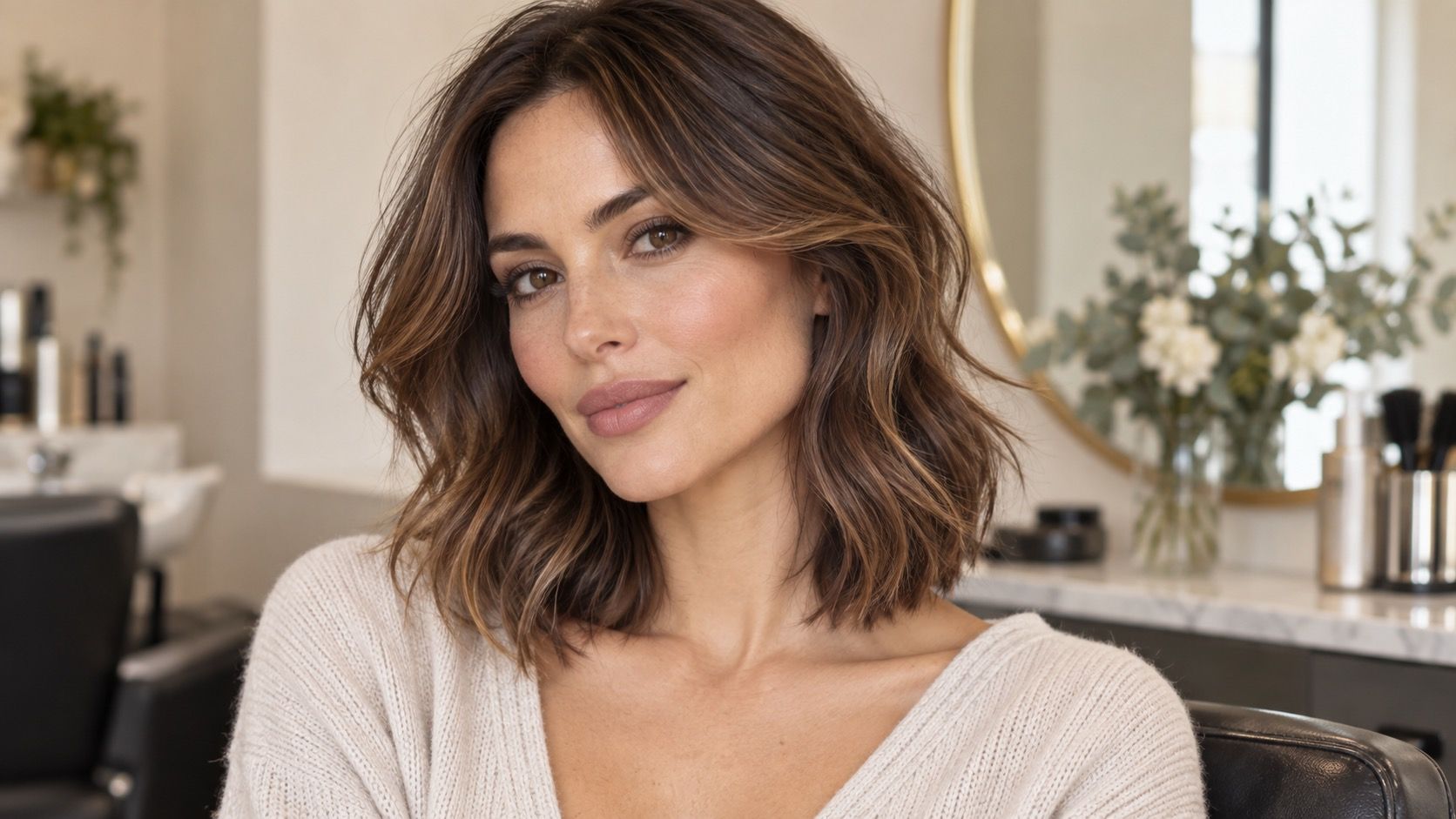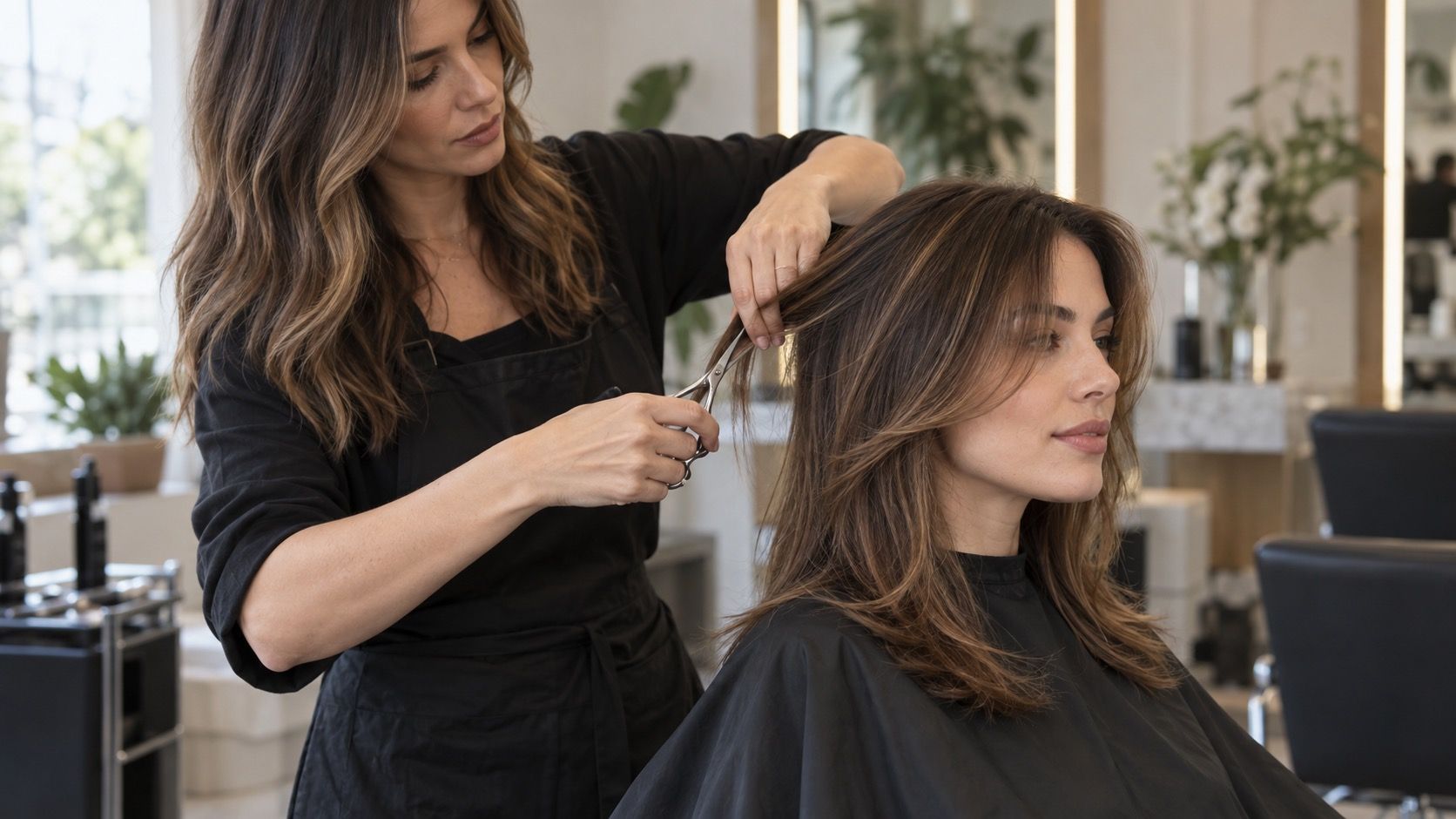
Finding hairstyles for face shape women can feel needlessly strict: one chart says a round face needs height, another says an oval face can wear anything. A haircut is more useful when it starts with the face you see in a normal mirror, your natural part, and the amount of time you will actually spend styling it on a Tuesday morning. Face shape is a clue, not a verdict; texture, density, hairline, glasses, and personal taste all change the result.
Begin with proportions rather than the label on a face-shape chart
Pull hair back loosely, stand by a window, and look at the widest point of the face, the jaw, and the length from hairline to chin. An oval face is usually longer than it is wide with a softly balanced jaw. A round face has similar width and length with gentler corners; a square face shows a more defined jaw and forehead. Heart and diamond shapes often narrow toward the chin, although a widow's peak can make the forehead look wider than it is. These are observations, not boxes that need to be passed.
Take a straight-on photo at eye level and compare it with the mirror. The phone held close can broaden the centre of the face, while a tilted selfie can create a jawline that is not there in daylight. Notice where your part falls, too. A deep side part changes the apparent width of the forehead; a centre part frames both sides equally. This short check is more dependable than tracing a face outline after an edited social-media photo.
Choose a length that survives your ordinary routine
Length controls where the eye lands. A chin-length bob puts attention near the jaw, so it can look beautifully deliberate on an oval or heart-shaped face and can also make a strong jaw the focal point. A collarbone lob is a forgiving starting point because it leaves room for movement around the cheeks without swallowing the neck. Long hair can elongate a rounder outline when it has some lift or broken-up texture, but very flat, centre-parted length can make any face look more vertical.
Before saving a haircut for face shape reference, ask what it looks like after air-drying. Fine hair that is washed daily may not hold the wide, brushed-out silhouette shown in the salon picture. Dense curls may reach the chin much sooner than the same measured length on straight hair. Tell the stylist whether you wear a ponytail at work, whether humidity expands your hair, and whether you use hot tools. A cut that suits the face but fights the routine becomes an expensive disappointment after the first wash.
| What you notice | Useful starting direction | Check before committing |
|---|---|---|
| Face looks close to round | Soft height at the crown, texture below the cheeks, or an off-centre part | Avoid judging from a wide-angle selfie |
| Jaw and forehead look similarly broad | Movement around the temples and jaw; soft layers or waves | See where the blunt edge will end when hair is dry |
| Face narrows to a small chin | Weight near the jaw or collarbone, curtain fringe, gentle volume at the sides | Do not add heavy crown volume by habit |
| Face appears long | Width through waves, fringe, or a shoulder-length shape | Check whether a centre part makes the effect stronger |
Use layers and volume where you want the outline to move
Layers are not automatically flattering; their placement matters. Shorter layers beginning around the cheekbones can make a face feel more open, while layers that start below the jaw keep the outline calmer. For a square or rectangular face, a softly textured perimeter often takes the hard edge out of a blunt line. For a heart-shaped face, a little fullness at jaw or collarbone level can balance a wider upper face. On a round face, height at the crown can be useful, but a huge mound of volume is not the only answer.
Hair texture decides how visible these choices will be. With straight, fine hair, a few internal layers may create movement without making the ends look thin. With thick waves, too many layers can create a triangular shelf that is wider exactly where you hoped for softness. Curly hair needs a dry-shape conversation: shrinkage, curl grouping, and the way the crown dries matter more than a ruler measurement. Ask to see the back and side profile before the final finishing spray hides the cut's real behaviour.
Pick bangs and a part for the forehead you actually have
Bangs change a face more quickly than a two-inch trim. A full, straight fringe shortens the visible forehead and can bring balance to a longer face, but it needs regular trimming and may separate in humid weather. Curtain bangs are easier to grow out and can soften a broad forehead or high temples; their opening can be adjusted around the brow bone. Wispy fringe is low commitment, though very sparse bangs may disappear against thick glasses or a strong eyebrow.
Try your natural part first. Forcing a centre part on a pronounced cowlick often produces a split that looks accidental by lunch. A side part can add asymmetry to a round or square outline, but it should not be so deep that one side collapses. At the consultation, move the part half an inch either way and look at the cheekbones. That tiny change can be more flattering than copying an entire celebrity haircut from a photo taken under studio lights.
Bring references that help a stylist make a real decision
Bring three or four photos, not twenty. One should show the overall length, one the fringe or part, and one the texture close to your own hair. Mark what you like: the weight at the ends, the visible cheekbones, or the fact that it can be tucked behind an ear. Also point out what you do not want, such as a heavily feathered finish or a sharp bob line. A good reference is evidence of a preference, not an order to reproduce someone else's density and bone structure.
Say how often you can return for maintenance. A cropped shape and blunt fringe may need attention every four to six weeks; long layers are usually calmer between appointments. If you colour your hair, discuss how the line will look when roots grow in and whether highlights are meant to emphasize texture around the face. The best hairstyle for my face shape is usually the one that gives you a clear option on busy days: worn natural, quickly blown smooth, or pinned back without losing its shape.
Test the cut for a week before deciding it was wrong
Salon styling is a demonstration, not the final verdict. Wash the haircut once, let it dry in your normal conditions, and photograph it in soft daylight. Try it with the makeup, earrings, and glasses you usually wear. If the shape feels off, identify the specific issue: too much weight at the jaw, fringe too dense, layers too short, or a part that keeps falling. Those are useful adjustment notes. Declaring that a face shape cannot wear a bob or long hair is not.
A flattering cut should make your features feel intentional while leaving room for preference. Some people love a strong jawline and want a crisp bob that celebrates it; others want waves that soften it. Both choices can work. Use face shape to ask better questions about proportion, then let your hair texture and life decide the answer.